

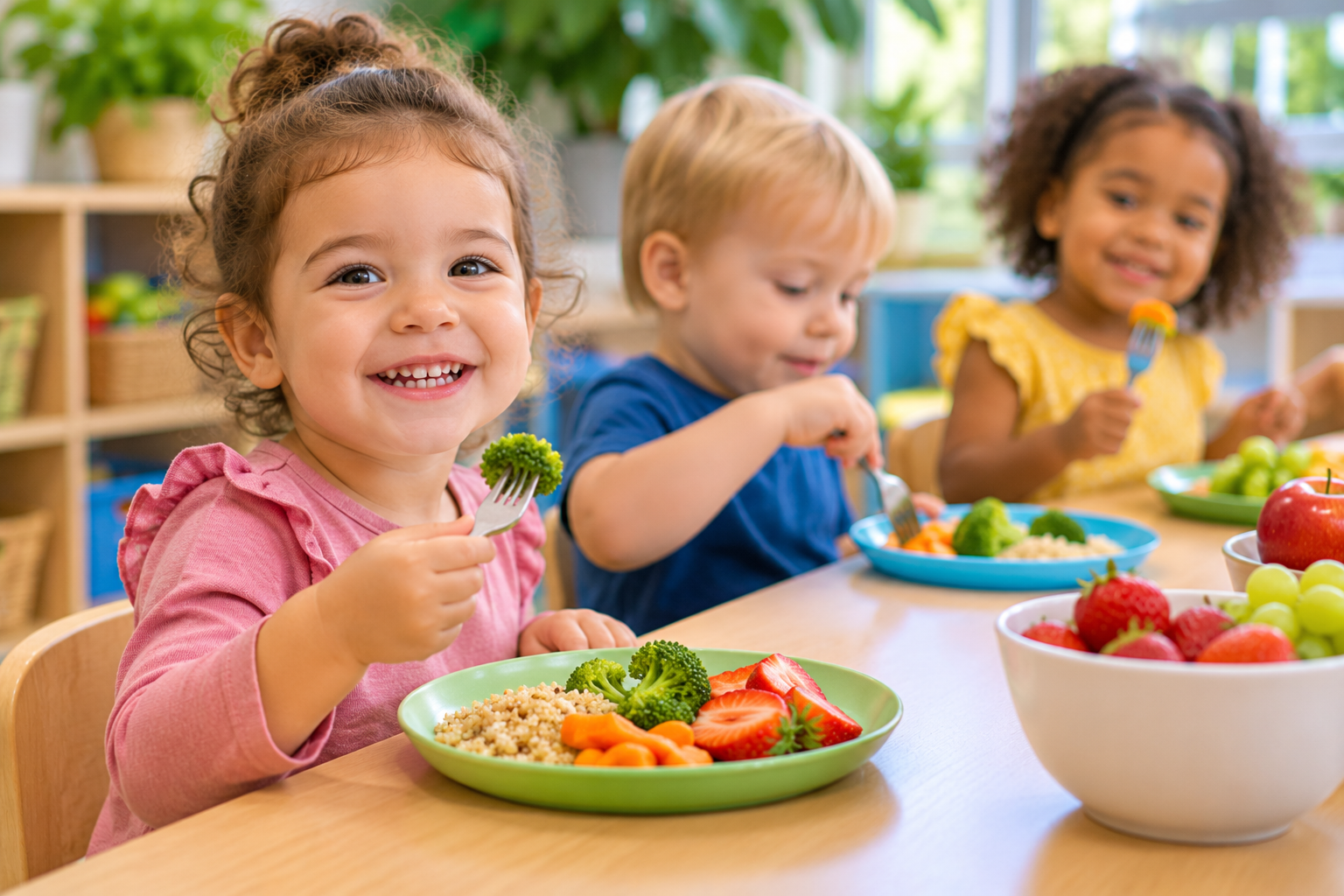
Picture your toddler sitting down for lunch after a busy morning of playing, exploring, and discovering something new. They’re surrounded by friends, learning to use utensils independently, and becoming familiar with different flavors and textures. It might seem like an ordinary part of their daycare routine, but those everyday mealtime experiences can play a meaningful role in their development.
For parents in Bloomington, MN, finding a childcare center that prioritizes healthy eating is about more than knowing what’s on the lunch menu. It’s about choosing an environment where nutritious food, positive routines, and age-appropriate learning work together to support growing children.
Healthy toddler eating habits begin with consistent opportunities to enjoy balanced meals, explore new foods, and develop a comfortable relationship with eating. High-quality early childhood programs can reinforce these habits by offering nutritious food in a welcoming environment where children learn alongside their peers.
For families evaluating childcare options, several factors are worth considering:
-
Freshly prepared meals: Thoughtfully prepared food can help children become familiar with a variety of nutritious ingredients.
-
Balanced nutrition: Meals that follow USDA child nutrition guidelines support age-appropriate nutritional needs.
-
Positive mealtime experiences: Eating with other children encourages independence, social interaction, and exploration.
-
Consistent food safety practices: Clear food policies and attention to dietary restrictions help create a more supportive dining environment.
-
Healthy routines: Regular meals and snacks establish predictable opportunities for children to eat throughout the day.
At Kinderplatz, we believe what children eat is just as important as what they learn. As an independently owned daycare and preschool serving Bloomington families for over 40 years, we’ve made thoughtful nutrition an important part of our approach to early childhood wellness. Through our partnership with Nick’s Wrap City Café, we provide freshly prepared, eco-healthy lunches that support our commitment to children’s physical development and well-being.
Why Are Healthy Eating Habits So Important During the Toddler Years?
Healthy toddler eating habits are important because the first few years of life are a period of rapid physical growth, brain development, and changing food preferences. Offering balanced meals and positive dining experiences helps young children receive important nutrients while developing familiarity with different foods and healthy routines.
Nutrition Supports Growing Bodies and Developing Minds
Toddlers are constantly on the move. Whether they’re climbing playground equipment, building with blocks, practicing new words, or participating in classroom activities, their bodies and brains are working hard throughout the day.
A varied diet provides nutrients that support this development. Protein contributes to normal growth and tissue development, calcium supports healthy bones and teeth, and iron plays an important role in brain development and oxygen transport.
Fruits, vegetables, grains, dairy foods or appropriate alternatives, and protein-rich foods each contribute to a balanced eating pattern.
The USDA’s Child and Adult Care Food Program establishes age-appropriate meal patterns that encourage variety across these food groups. These guidelines provide an important foundation for nutritious meals in early childhood settings.
For Bloomington parents balancing work schedules, commutes, and family responsibilities, knowing their child’s daycare emphasizes balanced nutrition can provide valuable reassurance.
Early Food Experiences Help Shape Future Preferences
Toddlers are naturally curious, but that curiosity doesn’t necessarily mean they’ll eagerly try every new food. It’s common for young children to develop strong preferences or become hesitant about unfamiliar flavors and textures.
Positive, repeated exposure can help children become more comfortable with different foods over time.
A toddler might initially ignore a vegetable served at lunch, then become curious after seeing classmates enjoy it. Another child may become interested in a new ingredient after encountering it several times in a familiar meal.
These experiences shouldn’t involve pressure or forcing children to finish their plates. Instead, supportive mealtimes give children opportunities to explore foods at their own pace.
How Does Kinderplatz Make Fresh, Eco-Healthy Meals Part of Everyday Childcare?
Kinderplatz incorporates fresh, eco-healthy meals into its daily childcare experience through a local partnership with Nick’s Wrap City Café and a commitment to USDA-aligned nutrition guidelines. Our approach emphasizes thoughtfully prepared lunches, non-fried foods, and a nut-free environment while helping children develop positive associations with mealtimes.
Freshly Prepared Lunches From Nick’s Wrap City Café
One of the features that makes our approach to local preschool nutrition in Bloomington, MN, distinctive is our partnership with Nick’s Wrap City Café, located right across the hall from our center.
Rather than treating lunch as an afterthought, we work with a local food-service partner to provide freshly prepared meals for our students.
This arrangement reflects our commitment to making nutrition a meaningful part of the childcare experience. It also gives families an example of how a locally owned childcare center can build relationships within its community to support the children it serves.
For parents working in Bloomington or commuting from nearby Edina and Richfield, that commitment can be an important consideration when choosing a daycare program.
Following USDA Child Nutrition Guidelines
Our daycare menu follows USDA Child Nutrition Program guidelines, which emphasize age-appropriate portions and balanced meal components.
These guidelines help early childhood programs plan meals that provide the nutrients young children need as they grow. Rather than focusing on individual foods in isolation, they encourage an overall eating pattern that includes different food groups.
We also serve milk during morning snack and lunch as part of our dining routine, with parent-provided alternatives accommodated for dietary restrictions. By making balanced nutrition part of the school day, we reinforce healthy habits that families can continue encouraging at home.
A Nut-Free Environment With No Fried Foods
Food safety and ingredient choices are important parts of our approach to eco-healthy childcare meals in Bloomington, MN.
Kinderplatz maintains a nut-free policy, helping us provide a more controlled food environment for children with relevant allergies and sensitivities. We also avoid serving fried foods, emphasizing freshly prepared meals that align with our nutritional priorities.
Of course, families managing food allergies should still discuss their child’s individual needs and any required precautions directly with our team. A nut-free policy is one important safety measure, but communication and appropriate allergy-management practices remain essential.
Our goal is to provide a dining environment where families feel informed and children can enjoy nutritious meals as part of their everyday routine.
How Do Shared Mealtimes Support Social and Emotional Development?
Shared mealtimes support toddler development by creating opportunities to practice communication, independence, social awareness, and everyday routines. In a Bloomington early childhood classroom, sitting down to eat with peers can become a learning experience that extends well beyond the food being served.
Learning Independence One Meal at a Time
For a toddler, mastering a spoon or learning to drink from an age-appropriate cup can be a major accomplishment.
These seemingly small activities support fine motor development and help children become more confident in their abilities. As they grow, children can gradually practice managing utensils, recognizing hunger and fullness cues, and participating in simple mealtime routines.
There’s also something meaningful about giving children the opportunity to try things for themselves. They may spill occasionally or need assistance, but those experiences are part of learning.
When mealtimes are patient and supportive, children can build independence without feeling rushed.
Building Social Skills Around the Table
Eating together also creates opportunities for children to interact in ways that feel natural.
Toddlers observe their classmates, practice simple conversations, learn to wait, and become familiar with shared routines. They may talk about the food on their plates, notice what a friend is eating, or practice basic table manners with guidance from caregivers.
For children attending daycare in Bloomington, these social interactions can help strengthen the same communication and cooperation skills they use during classroom activities. Mealtimes become another opportunity to build relationships and feel connected to the group.
Creating Positive Associations With Food
Children benefit from an environment where eating feels comfortable rather than stressful.
A predictable meal schedule, age-appropriate portions, and encouragement without pressure can help toddlers develop a more positive relationship with food. Allowing children to recognize when they’re hungry or satisfied also supports the gradual development of self-regulation.
The goal isn’t to make every child enjoy every vegetable or finish every serving. It’s to provide a supportive setting where nutritious foods are familiar and mealtimes are enjoyable.
What Makes Eco-Healthy Childcare Different From a Traditional Daycare Approach?
Eco-healthy childcare connects children’s everyday well-being with thoughtful decisions about food, classroom environments, and daily practices. For families seeking early childhood wellness in the Twin Cities, this approach can offer a more comprehensive perspective on supporting children’s health alongside their educational development.
Looking Beyond the Classroom Curriculum
When parents tour a daycare center, they naturally want to know about learning activities, classroom routines, teacher interactions, and opportunities for play.
However, nutrition deserves a place in those conversations, too.
Children spend a significant portion of their weekday hours in childcare, which means meals and snacks are a regular part of their experience. A center’s food choices and dining routines can contribute to the habits children develop during these important years.
At Kinderplatz, our eco-friendly philosophy influences how we think about both learning and daily care. We want children to have opportunities to grow intellectually, socially, emotionally, and physically in an environment that values their overall well-being.
The Benefits of Being Locally Owned and Independent
As a single-location, independently owned childcare center, we value our connection to Bloomington families and the surrounding community.
Our partnership with Nick’s Wrap City Café reflects that local approach. By working with a neighboring business to provide fresh lunches, we’re able to make food quality part of our daily childcare philosophy.
We’ve served families in the Bloomington area for more than four decades, and we understand that choosing childcare involves trust. Parents want to feel confident not only about how their children are taught, but also about how they’re cared for throughout the day.
For families traveling from Eden Prairie, Minneapolis, or Richfield, our approach provides another consideration when comparing early childhood education programs.
How Can Parents Reinforce Healthy Eating Habits at Home?
Parents can reinforce healthy toddler eating habits by keeping mealtimes consistent, offering a variety of nutritious foods, and allowing children to explore new flavors without pressure. When families and childcare providers follow similar approaches, young children have more opportunities to practice positive routines throughout the week.
Here are a few ways to build on the healthy eating habits children experience in daycare:
-
Maintain predictable meal and snack times. Regular routines help toddlers understand when food will be available and create consistency between home and childcare.
-
Offer familiar foods alongside new choices. Pairing an unfamiliar vegetable with foods your child already enjoys can make exploration feel less intimidating.
-
Encourage participation. Let your toddler help with simple, supervised activities such as washing produce or choosing between two suitable fruits.
-
Model positive eating habits. Children often learn through observation, so sharing balanced family meals can provide helpful examples.
-
Respect hunger and fullness cues. Encourage children to listen to their bodies rather than requiring them to finish everything served.
-
Communicate with your childcare provider. Share information about allergies, dietary restrictions, changing preferences, and other concerns that affect your child’s meals.
For busy families in Bloomington and surrounding Hennepin County communities, these strategies don’t require complicated recipes or elaborate meal preparation.
Consistency, patience, and positive experiences are often more helpful than trying to create the perfect meal every time.
It’s also worth remembering that picky eating is a common part of toddler development. Children may need repeated opportunities to become comfortable with new foods, and preferences can change as they grow.
By keeping communication open between home and daycare, parents and caregivers can work together to support each child’s individual needs.
Frequently Asked Questions About Healthy Toddler Nutrition and Eco-Healthy Childcare
Why Are Healthy Meals Important for Toddlers in Bloomington Daycare Programs?
Healthy meals provide nutrients that support normal growth, brain development, and everyday activity. For toddlers attending childcare in Bloomington, balanced meals also create opportunities to become familiar with different foods, establish eating routines, and practice age-appropriate independence during shared mealtimes.
Does Kinderplatz Provide Freshly Prepared Meals in Bloomington, MN?
Yes, Kinderplatz partners with Nick’s Wrap City Café, located across the hall from our center, to provide freshly prepared, eco-healthy lunches. Our menu follows USDA Child Nutrition Program guidelines, emphasizing balanced nutrition and thoughtful meal preparation as part of our commitment to children’s well-being.
Is Kinderplatz a Nut-Free Daycare Center in Bloomington?
Yes, we maintain a nut-free policy at Kinderplatz to help support a safer dining environment for our students. Parents of children with food allergies or dietary restrictions should communicate their child’s specific needs with our team so appropriate precautions and arrangements can be discussed.
What Does USDA-Aligned Childcare Nutrition Mean?
USDA-aligned childcare nutrition means meals are planned with reference to established child nutrition guidelines, including age-appropriate portions and balanced food groups. These recommendations help childcare programs provide meals and snacks that contribute to children’s nutritional needs during important stages of physical development.
How Can Daycare Help Toddlers Develop Better Eating Habits?
Daycare can support healthy eating habits by offering consistent meal routines, nutritious food choices, and positive interactions with peers and caregivers. Children also have opportunities to practice using utensils, recognize hunger and fullness cues, and become comfortable with unfamiliar foods through repeated exposure.
What Should Parents in Edina, Richfield, or Eden Prairie Look for in a Health-Focused Childcare Center?
Parents should ask about meal preparation, nutritional guidelines, food allergy policies, and how caregivers support positive mealtime experiences. Families commuting to Bloomington may also appreciate a center that prioritizes fresh food, clear communication about dietary needs, and a welcoming environment where physical wellness complements early education.
Give Your Child a Healthy Foundation for Learning and Growing in Bloomington
The toddler years are filled with exciting changes, from learning new words and making friends to becoming more independent with everyday activities. Healthy eating is an important part of that journey, and the routines children experience during childcare can help shape how they approach food as they grow. When fresh meals, balanced nutrition, and positive dining experiences are woven into the school day, children have opportunities to build habits that support their overall development.
At Kinderplatz, we’re proud to provide Bloomington families with an approach to early childhood care that values the whole child. Our independently owned center combines more than 40 years of local experience with a commitment to eco-friendly practices, fresh lunches from Nick’s Wrap City Café, and a nurturing environment where children can learn, explore, and thrive.
Discover Eco-Healthy Childcare and Fresh Dining at Kinderplatz in Bloomington, MN
Choosing the right daycare means finding a place where your child’s education, daily care, and well-being are all priorities. Contact Kinderplatz today to schedule a tour of our Bloomington childcare center and learn more about our fresh meal program, nut-free environment, and early childhood education opportunities for infants, toddlers, and preschoolers.