
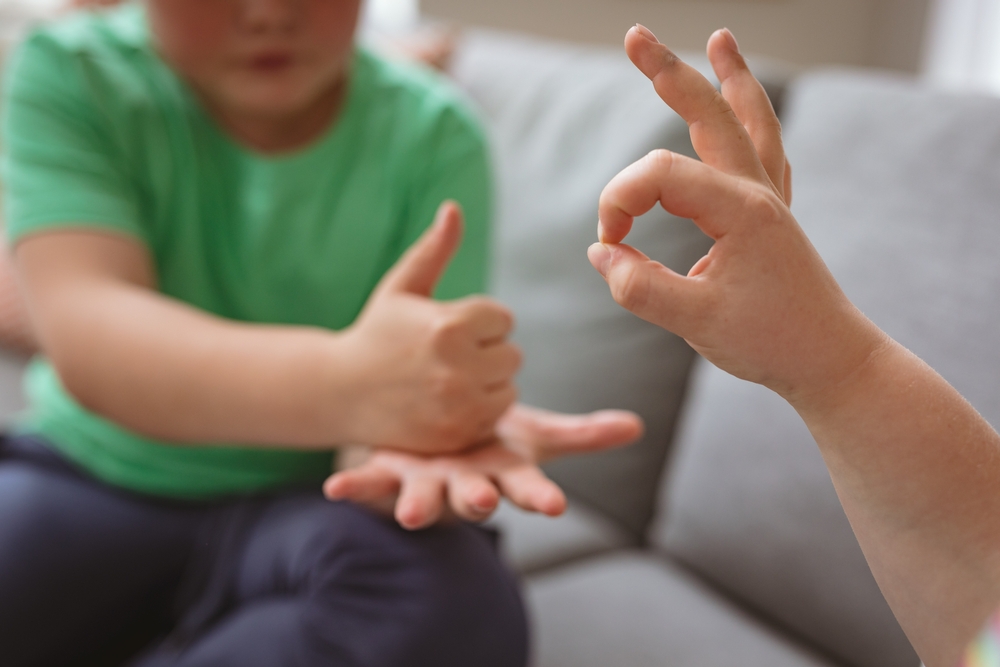
In the realm of early childhood education, nurturing a child’s ability to communicate is one of the most vital aspects of development. Communication fuels learning, fosters emotional bonds, and enhances a child’s confidence. While verbal language is the traditional focus of early communication strategies, sign language has gained increasing attention for its unique role in promoting language acquisition. It is not merely a tool for nonverbal communication but a powerful aid that helps unlock spoken language. This article explores how using sign language as a bridge to spoken language for toddlers can catalyze early language skills, foster emotional intelligence, and deliver long-term educational benefits.
The Science Behind Sign Language and Speech Acquisition
From birth, infants are immersed in a world of sound. However, the muscles required for articulate speech take time to develop. During this critical window, frustration often builds as babies understand more than they can express. Introducing sign language at this stage offers an outlet for communication, significantly reducing this frustration while simultaneously supporting the development of verbal skills.
Research consistently demonstrates that using sign language does not delay speech but rather accelerates it. When toddlers use signs to label objects, express needs, or respond to caregivers, they are engaging in the foundational aspects of language. This includes associating symbols (signs) with meanings, recognizing patterns, and developing cognitive connections between concepts and their representations. These are the very same skills that underlie spoken language. By creating these links early on, sign language helps wire the brain for verbal expression.
Additionally, early childhood language development using baby sign enhances brain activity in areas responsible for both motor planning and linguistic processing. Functional MRI studies show heightened activation in regions of the brain responsible for speech in children who use baby signs, indicating that gesture-based communication primes the neurological pathways that support verbal fluency.
Cognitive and Emotional Benefits in the Preschool Years
The developmental advantages of sign language in preschool programs go far beyond early vocabulary expansion. Children who learn and use signs typically demonstrate higher scores on IQ assessments, improved memory, and better problem-solving abilities. These benefits stem from the dual encoding of information: when a child hears a word and sees or produces a corresponding sign, the brain stores the information using both auditory and visual-spatial channels. This redundancy increases retention and retrieval efficiency.
Sign language also cultivates emotional intelligence. Young children often struggle to articulate complex emotions. Signs for words like “sad,” “angry,” or “scared” give them a concrete way to express what they’re feeling, even before they can verbalize these states. As a result, educators and caregivers can respond more appropriately, leading to fewer behavioral issues and a stronger sense of emotional safety.
In preschool environments, sign language fosters inclusive communication and builds empathy. Children with different developmental timelines or speech delays can still participate in conversations, share ideas, and connect with peers. The shared use of signs creates a classroom culture that values diverse communication styles, helping all children feel seen and heard.
Strengthening the Parent-Child Bond Through Sign
Introducing sign language in infancy creates a unique feedback loop between parent and child. When a baby signs “milk” and the parent promptly responds, the child learns that communication is powerful and meaningful. This mutual responsiveness builds trust and strengthens the attachment bond.
The shared joy of successful communication often results in more positive interactions, less crying, and a greater sense of harmony in the home. Parents report feeling more attuned to their child’s needs and emotions, while children gain confidence in their ability to influence their environment.
Furthermore, teaching and reinforcing signs requires frequent face-to-face interaction, which supports joint attention. This shared focus is a crucial predictor of later language skills. By spending these focused moments together, parents and children engage in rich, meaningful exchanges that go far beyond transactional communication.
Incorporating sign language into daily routines enhances the rhythm and predictability of the day. Signing during transitions, mealtimes, and playtime creates opportunities for language learning embedded in everyday life. The consistent pairing of spoken words with signs not only supports vocabulary growth but also encourages the development of grammar and syntax as children begin to form phrases and simple sentences with their signs.
Early Intervention and Support for Diverse Learners
While sign language benefits all children, it is especially valuable for those with speech or developmental delays. For children diagnosed with conditions such as autism spectrum disorder, Down syndrome, or apraxia of speech, verbal expression can be a significant hurdle. Sign language provides a tangible way to bridge that gap.
Speech-language pathologists often use sign language as part of early intervention programs because it enables children to express themselves while verbal skills are still emerging. This reduces reliance on guesswork or frustration-based behaviors and empowers children to become active participants in their learning environments.
In inclusive classrooms, the use of sign language creates a leveling effect. Rather than standing out because they cannot speak fluently, children with communication challenges often become leaders when signs are integrated into classroom routines. Their mastery of signs can be a source of pride and confidence, reinforcing their sense of belonging and agency.
The early use of sign language also supports multilingual households. When children are exposed to multiple spoken languages, signs provide a neutral bridge that supports comprehension across linguistic systems. Parents can pair signs with each spoken language, helping children make associations and navigate their multilingual environment with greater ease.
Laying the Foundation for Lifelong Language Learning
Using sign language as a bridge to spoken language for toddlers has ripple effects that extend well into later stages of development. Children who start communicating effectively at an early age tend to have stronger reading skills, broader vocabularies, and more positive attitudes toward learning. The ability to express oneself clearly and be understood reinforces a child’s motivation to engage with language-rich activities, such as storytelling, singing, and reading.
Sign language can also act as a gateway to learning additional languages later in life. Once children understand that symbols represent ideas and that language can take many forms, they develop a flexible, metalinguistic awareness. This cognitive flexibility supports not only language acquisition but also analytical thinking and creative problem solving.
Even when children transition fully to spoken language, the benefits of early signing remain. The muscle memory, cognitive scaffolding, and emotional regulation that were cultivated through sign language continue to influence their academic performance and social relationships. In short, signing plants seeds that blossom into a lifelong love of communication.
Conclusion
Sign language offers more than just a way to communicate before speech arrives. It opens a window into the mind of a child and gives them the tools to engage, connect, and grow. By embracing early childhood language development using baby sign, families and educators can unlock the full potential of communication during the most formative years. The developmental advantages of sign language in preschool programs are both profound and enduring, laying the groundwork for strong verbal skills, emotional intelligence, and cognitive resilience.
Whether used in the home, in classrooms, or in therapeutic settings, sign language as a bridge to spoken language for toddlers proves to be a powerful ally in the journey toward fluent, confident self-expression. As research and real-world experiences continue to confirm its value, sign language is poised to become an essential part of early childhood education. It is not only a tool for expression, but a bridge to a world where every child has a voice.